The Core Problem: Why Stateful Apps Need Edge Computing
Building applications that remember information – what we call 'state' – is surprisingly difficult. State involves coordinating actions across multiple users, ensuring consistency, and handling concurrent requests without chaos. Traditional serverless functions, designed to be stateless, struggle with this inherently. Each request is treated in isolation, making it hard to maintain context.
This limitation creates major problems for interactive applications like online games, collaborative editors, or even a simple shopping cart. Every interaction needs to fetch the entire state, perform updates, and then save it back, leading to latency and scalability bottlenecks. That's where edge computing comes in. Distributing your application closer to your users minimizes latency and reduces the load on central servers.
The ideal solution combines the benefits of serverless – scalability, cost-effectiveness – with the ability to maintain state at the edge. This allows for faster response times, improved user experiences, and the ability to handle a massive number of concurrent users efficiently. Cloudflare’s offerings, Durable Objects and Agents, are designed to address this very challenge.
Durable Objects: Cloudflare’s Foundation for State
Durable Objects are Cloudflare’s core offering for building stateful applications. They introduce the actor model to the serverless world. Think of each Durable Object as an independent actor, possessing its own private state and responding to messages. This model simplifies state management by encapsulating it within each object, preventing race conditions and simplifying concurrent access.
You have two primary options for storing data within a Durable Object: SQLite and a key-value store. SQLite provides a full relational database within the object, ideal for complex data relationships and queries. This is available even on Cloudflare’s free plans. The key-value store offers a simpler, faster option for basic data storage, and is available on all plans. Choosing between them depends on the complexity of your application’s data model.
Durable Objects also include an alarm functionality, allowing you to schedule tasks to run at specific times or intervals. This is useful for things like sending reminders, cleaning up old data, or performing background processing. Durable Objects enforce a single-writer constraint. Only one client can modify the state at a time. You have to design around this to avoid conflicts, though it rarely stops a project entirely.
- Actor Model: Encapsulated state management.
- SQLite: Relational database for complex data.
- Key-Value Store: Simple, fast data storage.
- Alarms: Scheduled task execution.
Traditional Workers: A Reminder of What We're Overcoming
Cloudflare Workers, in their original form, are designed to be stateless. They execute short-lived functions in response to requests, without retaining any information between invocations. This makes them incredibly fast and scalable, but fundamentally unsuitable for applications that require maintaining state across multiple requests.
Trying to force state into a stateless environment often involves complex workarounds. Developers might resort to external databases, caching layers, or session management systems. These solutions add overhead, increase latency, and introduce potential points of failure. It’s a lot of extra work just to achieve something that Durable Objects and Agents handle natively.
The purpose of revisiting Workers isn't to criticize them. They're excellent for many use cases. It’s to understand why Cloudflare built Durable Objects and Agents – to fill a critical gap and enable a new class of stateful applications at the edge.
Cloudflare Agents: Building on Durable Objects
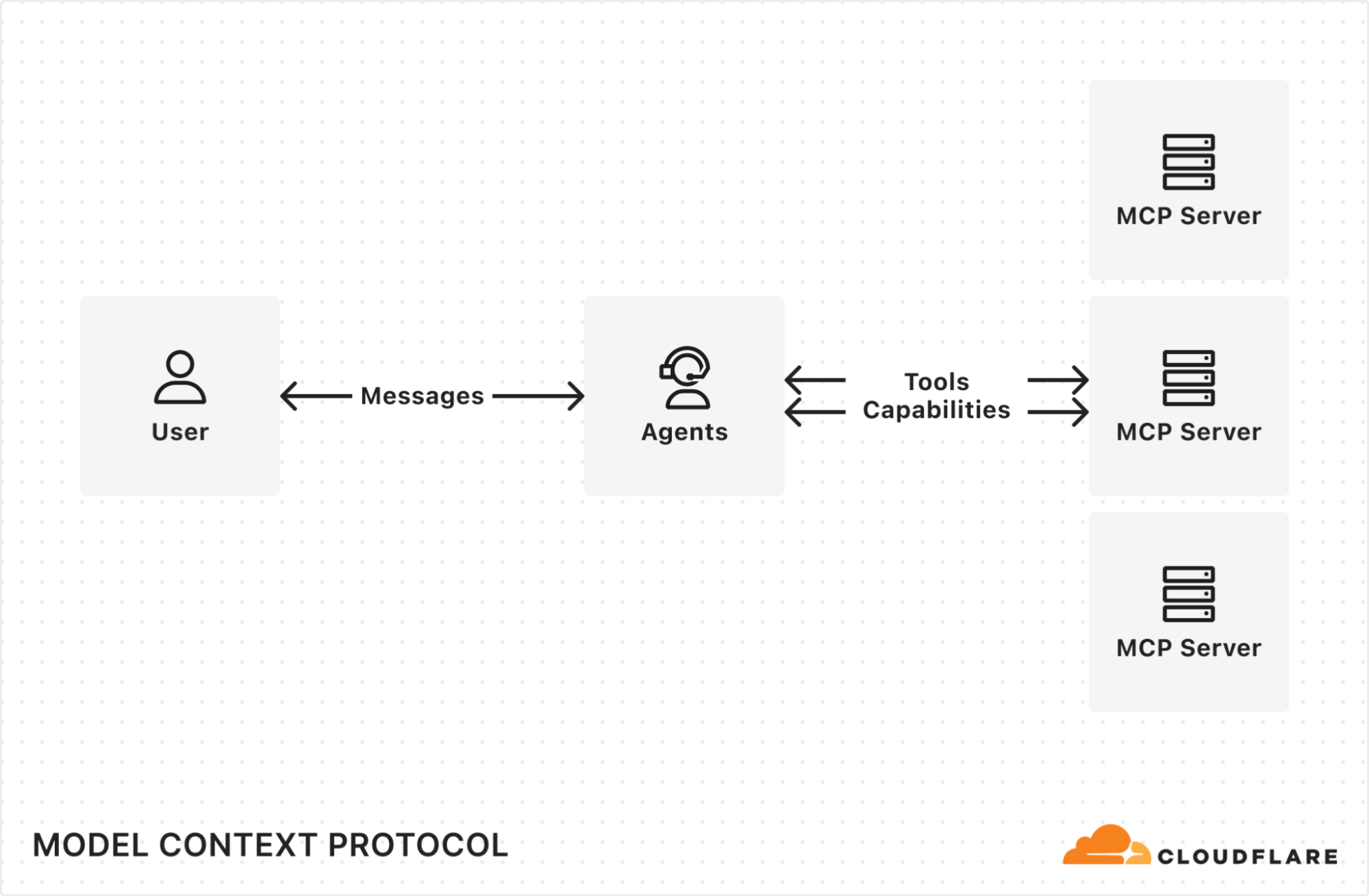
Cloudflare Agents are not a replacement for Durable Objects; they are built on top of them. Think of Agents as a higher-level abstraction that simplifies the development of specific types of stateful applications, particularly those involving AI. They leverage the underlying stateful capabilities of Durable Objects, but add a layer of tooling and functionality.
Agents come with built-in features like tool integration, allowing them to interact with external APIs and services. They also support chat functionality, making it easier to build conversational AI applications. And, like Durable Objects, they utilize the alarm functionality for scheduled tasks. The Agents SDK provides a streamlined way to define and deploy these agents.
Essentially, Agents provide a pre-built framework for common AI use cases, reducing the amount of boilerplate code developers need to write. They handle a lot of the complexities of state management and tool integration, allowing you to focus on the core logic of your application. This makes them a powerful option for rapidly prototyping and deploying AI-powered features.
When to Choose Durable Objects Directly
There are situations where using Durable Objects directly gives you the control and flexibility you need. If your application requires very fine-grained control over state management, or if you have a complex data model that’s best suited for SQLite, Durable Objects are the way to go. You also might choose Durable Objects if you don’t need the specific features offered by Agents, like the built-in tool integration or chat functionality.
Consider Durable Objects for scenarios like building a multi-player game backend where you need precise control over player state, or a collaborative document editing application where you need to manage concurrent updates efficiently. Any application with complex, relational data that benefits from the power of SQLite is a strong candidate for direct Durable Object usage.
The key is to assess whether the additional abstraction layer of Agents provides enough value to justify the loss of control. If you need maximum flexibility and performance, Durable Objects are often the better choice.
Cloudflare Agents vs Durable Objects for Stateful Apps
| Complexity of State | Need for Tool Integration | Real-time Requirements | Development Speed |
|---|---|---|---|
| Durable Objects | Medium | Low | Medium |
| Cloudflare Agents | Low | High | High |
Illustrative comparison based on the article research brief. Verify current pricing, limits, and product details in the official docs before relying on it.
When Agents Simplify Development
Cloudflare Agents really shine in applications where you can take advantage of their built-in AI features and simplified state management. If you’re building a customer service chatbot, for example, Agents can handle the conversation flow, manage user context, and integrate with your CRM system with minimal code.
Automated workflows and AI-powered assistants are also excellent use cases for Agents. They can automate repetitive tasks, provide personalized recommendations, and respond to user requests in a natural language interface. The trade-off here is convenience versus control. You sacrifice some flexibility for a faster development cycle.
Essentially, if you're looking to quickly build an AI-powered application without getting bogged down in the details of state management and tool integration, Agents offer a compelling solution. They’re particularly well-suited for applications where the primary value proposition is the AI itself.
Practical Considerations: Limits and Trade-offs
Both Durable Objects and Agents come with limitations you need to be aware of. The single-writer constraint of Durable Objects, as mentioned before, requires careful design to avoid conflicts. While Cloudflare manages scaling, you should consider the potential for cold starts, where a Durable Object needs to be initialized after a period of inactivity. This can introduce latency for the first request.
Cost is also a factor. Stateful services are generally more expensive than stateless ones, due to the storage and compute resources required. You'll need to carefully monitor your usage and optimize your application to minimize costs. I’m not able to provide exact concurrency limits or pricing details, as those are subject to change.
Finally, remember that both technologies are relatively new. While Cloudflare is actively investing in these platforms, you may encounter unexpected issues or limitations. Thorough testing and careful planning are essential for building robust and reliable applications.

No comments yet. Be the first to share your thoughts!