
Start with debugging tools
Use this section to make the Top 5 AI-Driven Debugging Tools for decision easier to compare in real life, not just on paper. Start with the reader's actual constraint, then separate must-have requirements from details that are merely nice to have. A practical choice should survive normal use, maintenance, timing, and budget. If a recommendation only works in an ideal situation, call that out plainly and give the reader a fallback path.
The simplest way to use this section is to write down the must-have criteria first, then compare each option against those criteria before weighing nice-to-have features.
5 AI-Driven Debugging Tools for 2026: Automate Fixes and Optimize Code Review
Manual log analysis and guesswork are slowing down 2026 development cycles. These five tools automate fix suggestions and streamline code reviews, letting you catch regressions before they hit production.
1. GitHub Copilot Chat for inline code fixes
GitHub Copilot Chat integrates directly into your IDE, allowing developers to request inline fixes for syntax errors or logical bugs without leaving their workflow. This tool excels at rapid iteration, suggesting corrected code snippets based on context. It reduces the cognitive load of debugging by offering immediate, context-aware solutions that fit seamlessly into existing codebases.

2. Sentry AI for automated error triage
Sentry AI automates the initial triage of production errors, grouping similar exceptions and highlighting the root cause with minimal manual effort. By analyzing stack traces and recent commits, it prioritizes critical issues, allowing teams to focus on high-impact bugs first. This automation significantly reduces mean time to resolution (MTTR) for live applications.

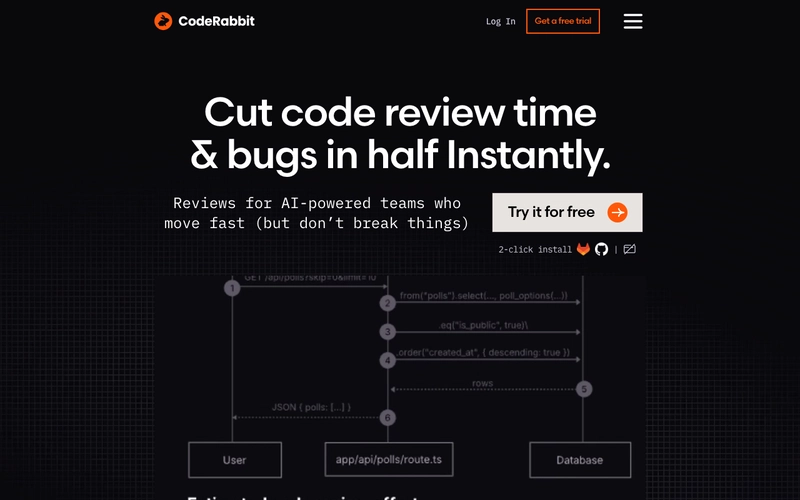
3. CodeRabbit for AI-powered pull request reviews
CodeRabbit provides automated code reviews by analyzing pull requests for potential bugs, security vulnerabilities, and style inconsistencies before merging. It offers specific, actionable feedback that helps maintain code quality standards across teams. This tool acts as a second pair of eyes, catching subtle errors that human reviewers might overlook during fast-paced development cycles.
4. Amazon CodeWhisperer for real-time vulnerability scanning
Amazon CodeWhisperer scans code in real-time for security vulnerabilities and provides immediate remediation suggestions. It integrates with popular IDEs to identify potential security risks like SQL injection or improper data handling as you type. This proactive approach helps developers write secure code from the start, reducing the need for extensive post-development security audits.

5. GitLab Duo for integrated issue detection
GitLab Duo connects AI capabilities directly to the GitLab platform, detecting issues in code and documentation automatically. It helps identify potential problems in merge requests and issues, streamlining the development lifecycle. By integrating debugging and review processes into a single platform, it reduces context switching and accelerates the path from code commit to production deployment.
How to pick the right AI debugging tool
Choosing the right AI-driven debugging tool comes down to matching the software to your stack and workflow. A tool that excels at analyzing Python memory leaks might struggle with C++ pointer issues, so start by identifying where your team spends the most time fixing bugs.
1. Match the tool to your primary language
Most AI debuggers are optimized for specific ecosystems. If you work primarily in JavaScript or Python, look for tools with native integrations into VS Code or PyCharm. For C# or Java, ensure the tool supports the specific runtime environments you use, such as .NET or the JVM. Mismatched tooling creates friction that slows down development more than the bugs themselves.
2. Prioritize automated fix capabilities
Not all AI tools just highlight errors; the best ones suggest or apply the fix. Look for features that can automatically patch code based on context. This moves the tool from a passive observer to an active participant in your code review process. The goal is to reduce the time between spotting a bug and deploying the correction.
3. Evaluate integration with your CI/CD pipeline
An AI debugger that only works locally is less valuable than one that catches issues before they reach production. Check if the tool offers API access or plugins for GitHub Actions, GitLab CI, or Jenkins. Automated integration ensures that every pull request is reviewed by the AI, catching regressions early in the development cycle.
| Feature | What to Look For |
|---|---|
| Language Support | Native support for your primary stack |
| Fix Capability | Auto-patching or one-click suggestions |
| CI/CD Integration | GitHub, GitLab, or Jenkins plugins |


As an Amazon Associate, we may earn from qualifying purchases.
4. Check for context-awareness
Generic error messages are common; context-aware fixes are rare. The right tool understands your codebase structure, not just the syntax of the broken line. It should reference related files, understand your project’s architecture, and avoid suggesting fixes that break other parts of the system. This reduces the need for manual verification after applying AI suggestions.
5. Verify data privacy and security
AI tools often analyze your source code to provide suggestions. Ensure the vendor has clear data privacy policies, especially if you work with proprietary or sensitive code. Look for options that allow on-premise deployment or local processing if cloud-based analysis is a concern for your organization.
No comments yet. Be the first to share your thoughts!